
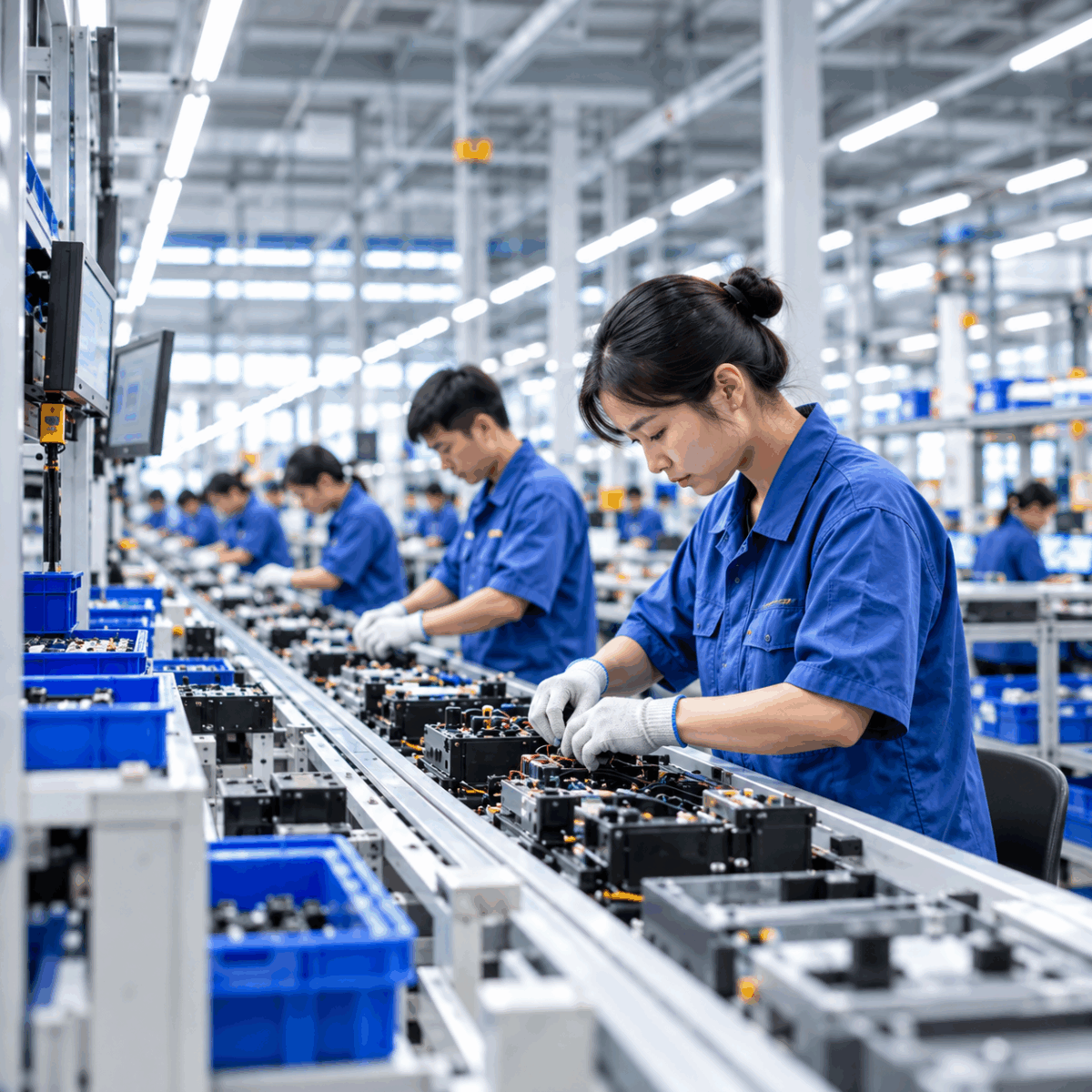
Sourcing products from China continues to offer real opportunities for European companies. The country has a broad manufacturing base, an extensive network of specialised suppliers and the ability to produce everything from standard components to highly customised products.
But finding a factory and getting a competitive quotation is only the beginning.
In 2026, European buyers need to look beyond the unit price. Changing trade conditions, stricter compliance requirements and the need for reliable deliveries make it more important than ever to choose the right suppliers and manage each stage of the purchasing process carefully.
So, what should companies get right when sourcing from China?
1. Look beyond the price
Price is often the first thing buyers compare. It is also one of the easiest ways to make the wrong decision.
A factory may offer an attractive unit price, but what does that price actually include? Are packaging, tooling and accessories covered? Is there a minimum order quantity? What are the payment terms and production lead time?
There are other costs to consider as well, including international freight, customs duties, import requirements and quality inspections.
A lower quotation does not necessarily mean a lower total cost.
For European companies, the objective should be to compare suppliers on a consistent basis and understand the full cost of getting a product from the factory to its final destination.
Sometimes, paying slightly more for a supplier with better quality, clearer communication and more reliable delivery can be the better business decision.
2. Make sure the supplier is right for your project
China has an enormous number of manufacturers and trading companies. Finding potential suppliers is rarely the only challenge. The real question is whether they are suitable for your specific needs.
A factory may be excellent at producing standard products but have limited experience with customised designs. Another may offer a wide catalogue but outsource most of its production.
Neither situation is automatically a problem. What matters is understanding what the supplier can actually do.
Before placing an order, buyers should look at the supplier’s relevant experience, production capabilities, quality management, equipment and ability to meet the required specifications.
It is also worth clarifying which processes are carried out in-house and which are subcontracted.
A supplier’s website or product catalogue can be a useful starting point, but it rarely tells the whole story. When necessary, a factory visit or a more detailed assessment can help confirm whether the supplier is a good match.
3. Get the specifications right before production
Many sourcing problems begin with misunderstandings rather than poor intentions.
A product description may seem clear to the buyer but leave room for interpretation by the manufacturer. Differences in materials, dimensions, finishes, components or packaging can lead to unexpected results.
This is particularly important for customised products and projects involving technical requirements.
Before production starts, buyers should provide clear specifications, drawings or reference samples wherever possible. Any important requirements should be confirmed in writing, including the materials to be used, acceptable tolerances, packaging details and quality expectations.
Samples should also be checked carefully before approval.
If changes are made during development, the latest specifications and approved sample should be clearly identified. Otherwise, the factory may end up producing according to an outdated version.
A little more preparation at the beginning can prevent costly corrections later.
4. Plan quality control from the start
A good sample does not guarantee that the entire production batch will meet the same standard.
Materials can vary, assembly errors can occur and production conditions may change as quantities increase. By the time a problem is discovered at destination, correcting it can be expensive and time-consuming.
Quality control should therefore be considered from the beginning of the project, not only when the goods are ready to ship.
Depending on the product and the level of risk, this may involve checking the initial sample, monitoring production, inspecting finished goods or verifying packaging before shipment.
The appropriate approach will vary from one project to another. A simple product may require fewer checks than a technically complex or highly customised item.
The important point is to agree on the quality requirements in advance and identify potential problems as early as possible.
5. Take trade conditions and compliance seriously
Sourcing from China also means understanding the requirements that apply when products enter the European market.
Depending on the product, buyers may need to consider customs classification, applicable duties, product safety requirements, testing, labelling and other regulatory obligations.
Trade measures and import rules can also change. A price agreed with a supplier today does not automatically reflect every cost or requirement that may apply when the goods arrive.
For this reason, buyers should check the rules relevant to their specific products and destination markets before confirming an order.
It is also important to establish who is responsible for providing technical documents, certificates and other required information.
Clear responsibilities help avoid delays and reduce the risk of discovering compliance issues after production has already started.
6. Build a working relationship, not just a supplier list
A successful sourcing project rarely depends on price alone.
Communication matters. Suppliers need to understand what the buyer expects, and buyers need to know when a problem arises or a decision is required.
Regular follow-up can make a real difference, especially when products are customised, several suppliers are involved or the buyer is managing production remotely.
For some companies, developing a second supplier for critical products may also be worthwhile. This does not mean every product needs multiple sources. It means understanding the risks of relying too heavily on a single supplier and deciding where additional flexibility makes commercial sense.
Over time, a reliable supplier relationship can improve coordination, make future orders easier to manage and support the development of new products.
How ECI can support your sourcing projects
At Eurasia Consultis, we help European companies identify and work with suppliers in China.
Depending on the project, our support can include supplier research, factory visits, quotation comparisons, technical discussions, sample coordination, production follow-up and quality control.
We can also help clarify specifications and coordinate communication between the customer and the manufacturer, helping both sides work towards the same expectations.
Our role is not simply to find a factory offering the lowest price. It is to help our clients identify suitable manufacturing partners and manage the practical details that influence the success of an order.
Every project is different, and the right approach depends on the product, the required quality, the order volume and the client’s priorities.
Better sourcing starts with better preparation
China remains an important sourcing destination for European companies, but successful purchasing requires more than finding a competitive quotation.
Understanding the full cost, selecting the right supplier, defining specifications, planning quality control and checking applicable requirements can make a significant difference.
The goal is not to eliminate every risk. It is to identify the important ones early and make informed decisions throughout the process.
Because in sourcing, the best deal is not necessarily the cheapest offer. It is the one that delivers the right product, at the right quality, with the fewest surprises.