
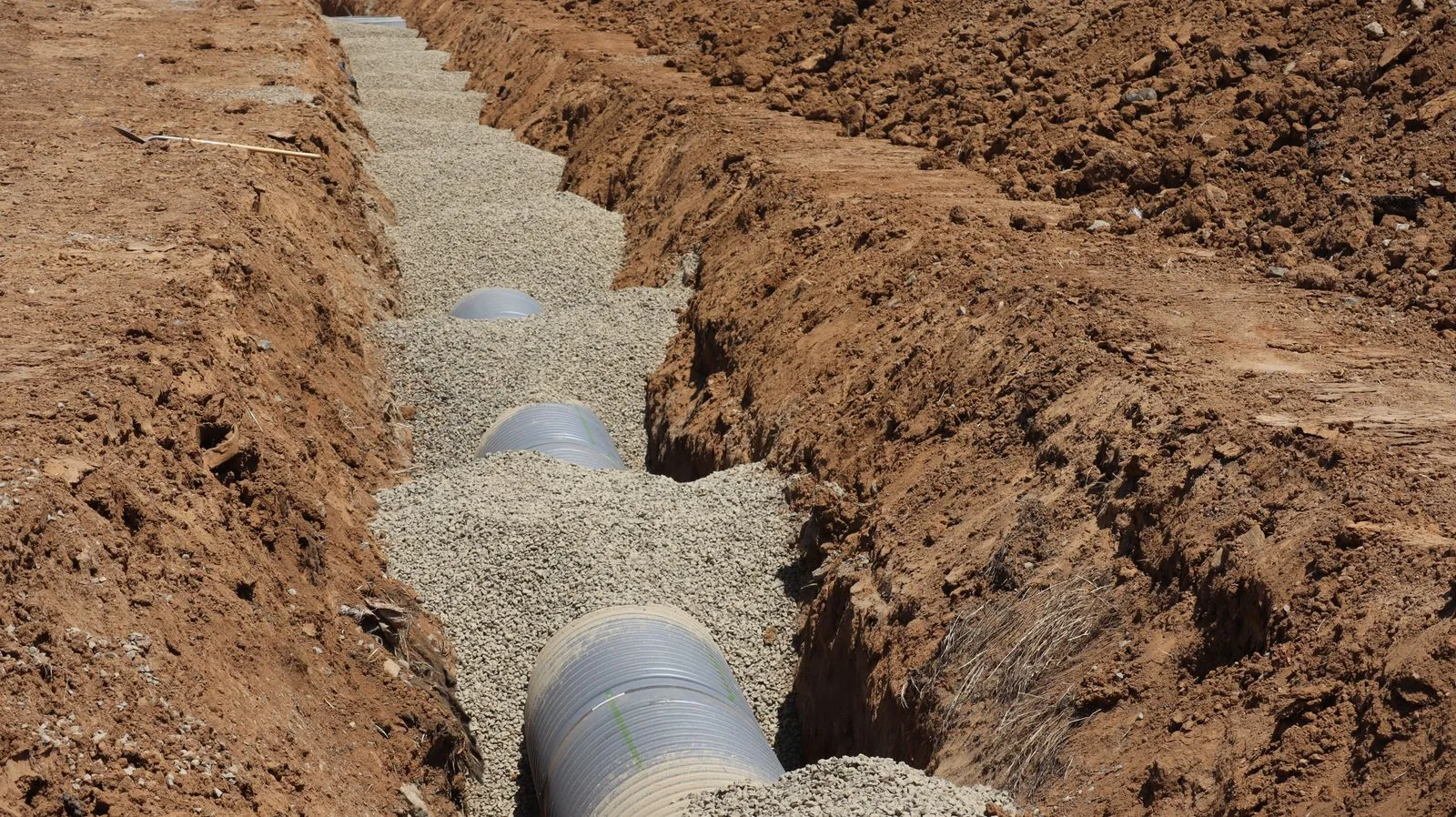
Building materials · HDPE pipes
Sourcing HDPE pipes in China
Eurasia Consultis supports importers, building-material distributors, design offices and utility contractors who want to source high-density polyethylene (HDPE) pipes from manufacturers in China. We do not manufacture them: we are a sourcing and trading partner.
Examples of products we can source
Illustration visuals of products that can be sourced. These are not ECI projects. Some images are illustration photos (Pexels licence).
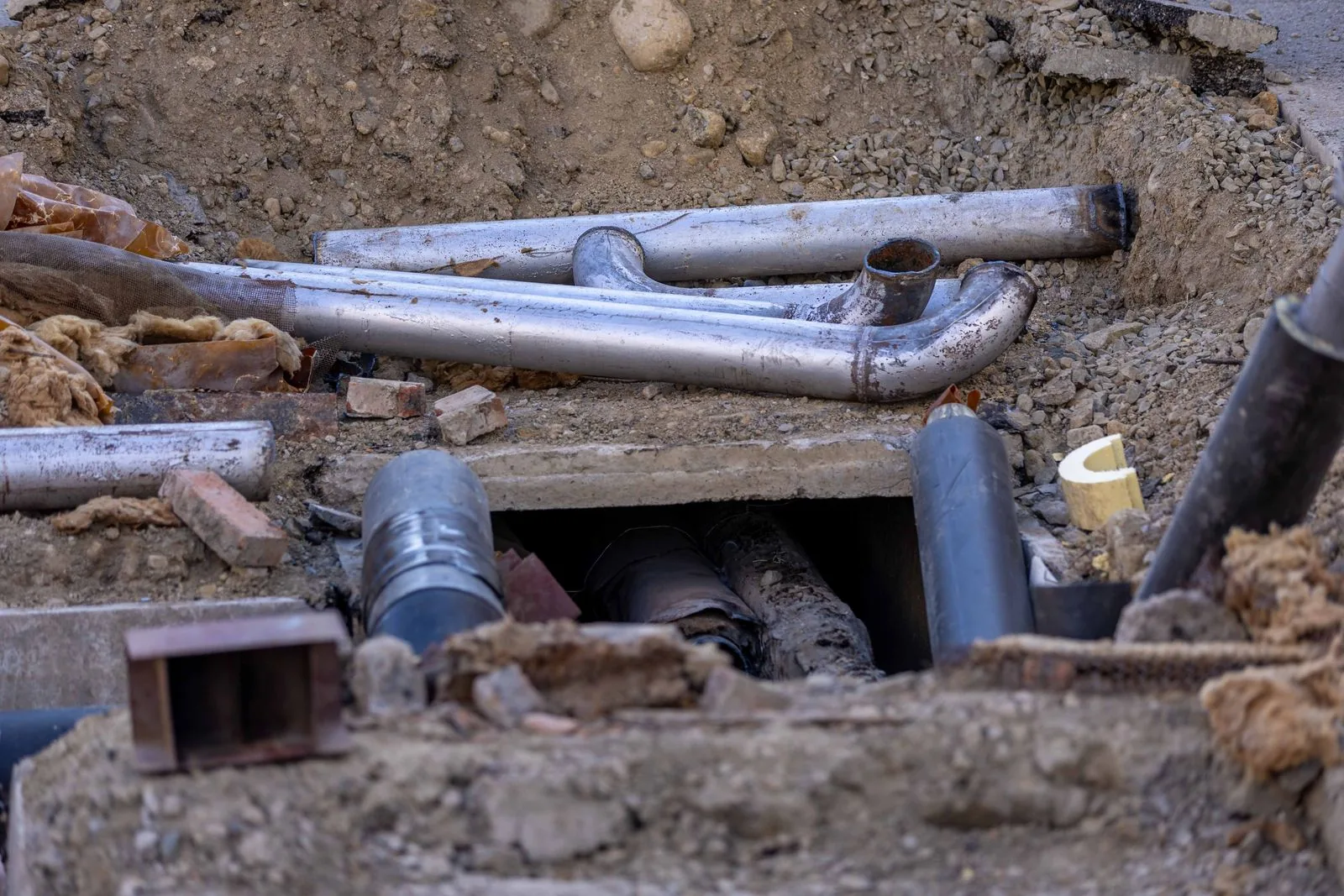
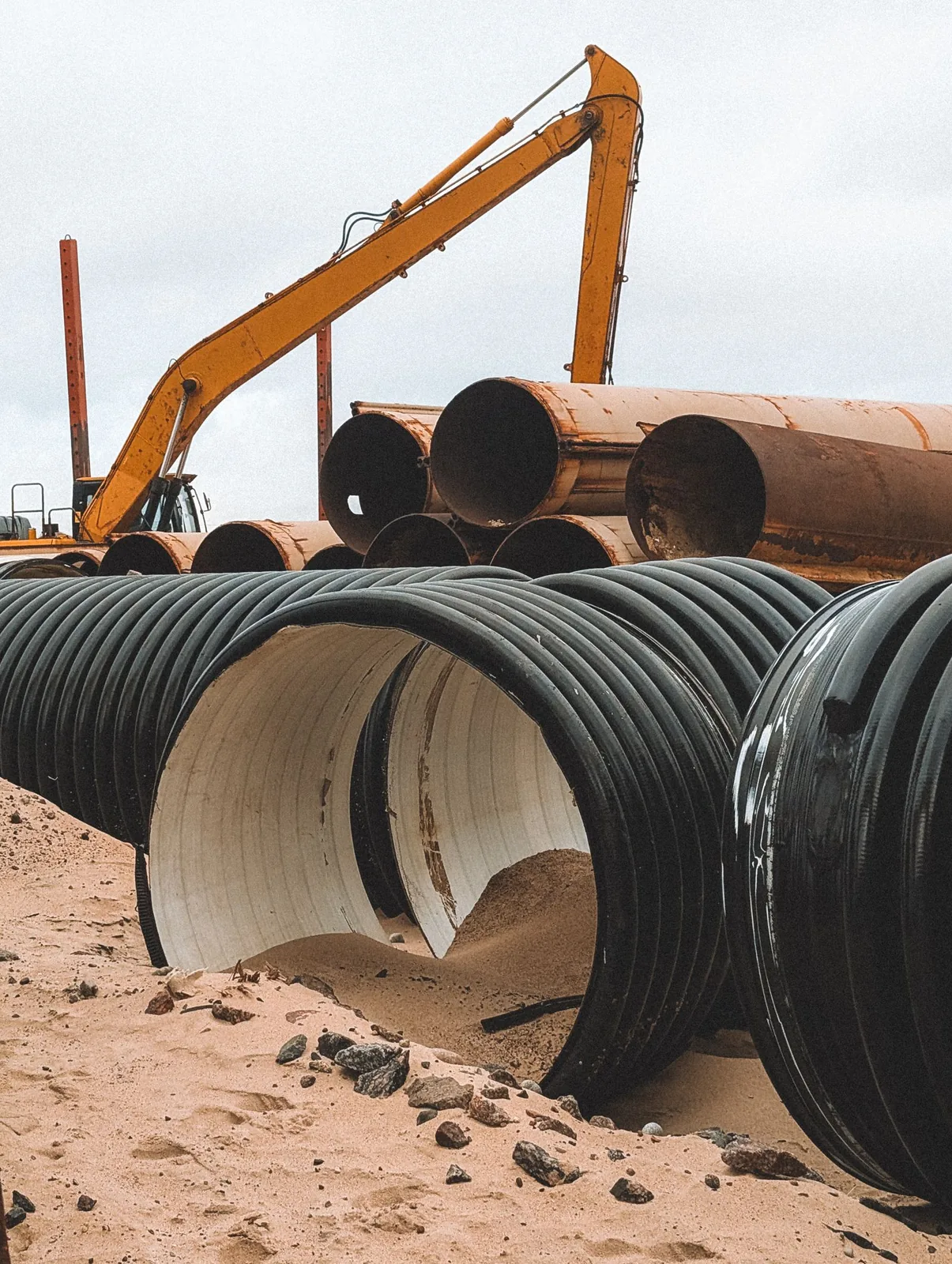
We help formalise the need (use, diameters, pressure, target standards), identify suitable manufacturers, then follow samples, production, quality control and shipment. HDPE is a material widely used for water transport and some buried or industrial networks.
Technical catalogues often insist on the hygiene of drinking water when the use requires it, on assembly by welding (electrofusion or butt welding), and on a temperature behaviour and a service life presented by the manufacturers. These statements — in particular very long service lives or wide temperature ranges — are manufacturer claims. We treat them as points to be checked (formulation, standard, test report, destination market), not as Eurasia Consultis guarantees. Other plastic systems can be studied if they meet the same project, but they are not presented here as a single range already assembled.
Typical range we can source
In the absence of a diameter and pressure-class table validated as an ECI offer, we describe the families and the specification points, without inventing a class matrix or a list of diameters.
| Family / topic | What is typically sourced | Points to frame |
|---|---|---|
| HDPE pipes for water networks | Tubes in coils or in bars, depending on the diameter | Use (potable or not), diameter, class, colour, marking |
| Assembly | Fittings to be welded, electrofusion, butt welding | Compatibility of pipes and fittings, welding procedure, training that may be required |
| Potable use | Formulation and documents of suitability for contact with water | Requirements of the destination market, reports to collect and review |
| Temperature behaviour | Manufacturer data to be checked | Do not repeat a range until it has been confirmed for the use |
| Service life | A claim frequently seen in catalogues | To be documented (standard, assumptions), not guaranteed as they stand |
| Complementary plastic systems | Other materials as the project may require | Outside the core of this page; to be handled in a separate brief if relevant |
Pipe marking, batch traceability and dimensional regularity (diameter, ovality, wall thickness) are as important as the material itself.
Who this page is for
These pipes are used for water supply or distribution networks, some buried networks, irrigation or industrial uses, depending on the grade and the associated documents. A distributor needs common diameters, clear packing and stable documentation. A worksite or design office will expect a precise match with the specification. Use for “water intended for human consumption” must be declared from the brief: it changes the documents and the tests to plan.
What we do on this type of project
The brief specifies the use, diameters, target pressure rating, installation method, market and volumes. We look for manufacturers for whom PE pipe extrusion and export are part of the job, able to provide data sheets, batch certificates and, where relevant, suitability reports.
Samples (cut lengths, sometimes fittings) make it possible to check appearance, marking and dimensions and, if you request it, to commission tests at an independent laboratory. In production, inspection can cover dimensions, ovality, surface appearance, marking, batch consistency, packing and the presence of batch documents. Eurasia Consultis is not a certification body: we help gather and review the documents, we do not issue a certificate of conformity. No single minimum order quantity is published here.
Questions to frame the need
- Which use (drinking water, irrigation, industrial, other) and which destination market?
- Which diameters and which target pressure rating or class?
- Packed in coils or in bars? Which fittings are needed?
- Which documents (standard, suitability for contact with water, batch certificates) are required?
- Which volumes and which timetable?
Frequently asked questions
Does Eurasia Consultis manufacture HDPE pipes?
No. We are a sourcing and trading partner, not an extruder. We support the framing, the selection of manufacturers in China, quality control and the organisation of export.
Can you guarantee a service life of several decades?
No. Such durations sometimes appear in manufacturer catalogues, under certain assumptions. We treat them as claims to be documented (standard, conditions), not as a Eurasia Consultis guarantee.
Are the pipes suitable for drinking water?
Only if the use is planned from the outset and if the manufacturer’s documents, possibly completed by tests, match the requirements of the target market. We do not display this suitability by default.
Should fittings also be sourced?
It is often desirable, for assembly compatibility. This can be done at the same manufacturer or at a second one, depending on the tooling. The welding method must be framed at the same time as the pipe.
How is HDPE transported?
In coils or in bars, depending on the diameter, with clear void-fill and identification. Prolonged sun exposure and the logistics plan are part of the follow-up.
Can other plastics be studied in the same project?
Yes, if the brief justifies it, but it is not automatic. A relevant manufacturer per family is better than a catalogue that is too broad and poorly mastered.
Related pages
- Sourcing building materials in China
- Sourcing geotextile
- Sourcing bubble insulation
- Sourcing outdoor slats
- Sourcing doors in China
- Sourcing aluminium and PVC windows in China


