Beyond Finding Suppliers: Why Managing Suppliers in China Matters
Finding a supplier in China has never been easier. Online platforms, trade fairs and business networks give international buyers access to thousands of manufacturers across almost every industry.
But finding a supplier is only the beginning.
The real challenge is making sure that the supplier can consistently deliver what was agreed: the right quality, at the right price, within the expected timeframe.
For European companies sourcing from China, this is where supplier management becomes essential.
In an earlier article we looked at how to build a reliable sourcing strategy in China. Here we focus on the next step: managing the relationship with your suppliers, from factory selection to delivery.
1. A competitive quotation does not guarantee a reliable supplier
A factory may offer an attractive price and present impressive product samples. However, these elements alone do not tell the whole story.
Does the factory have sufficient production capacity? Does it have experience with export markets? Can it meet the required quality standards? Is its production process sufficiently controlled to ensure consistent results?
These questions are particularly important when developing a new product or placing a significant order.
Choosing a supplier should therefore involve more than comparing quotations. It requires evaluating the factory’s actual capabilities and its ability to meet the project’s requirements.
2. The gap between samples and mass production
One of the common challenges in international sourcing is the difference between an approved sample and the final mass-produced goods.
Materials may change, finishing may not be consistent, or certain specifications may be interpreted differently during production.
Even when the initial sample meets expectations, the final products may not always reflect the same level of quality.
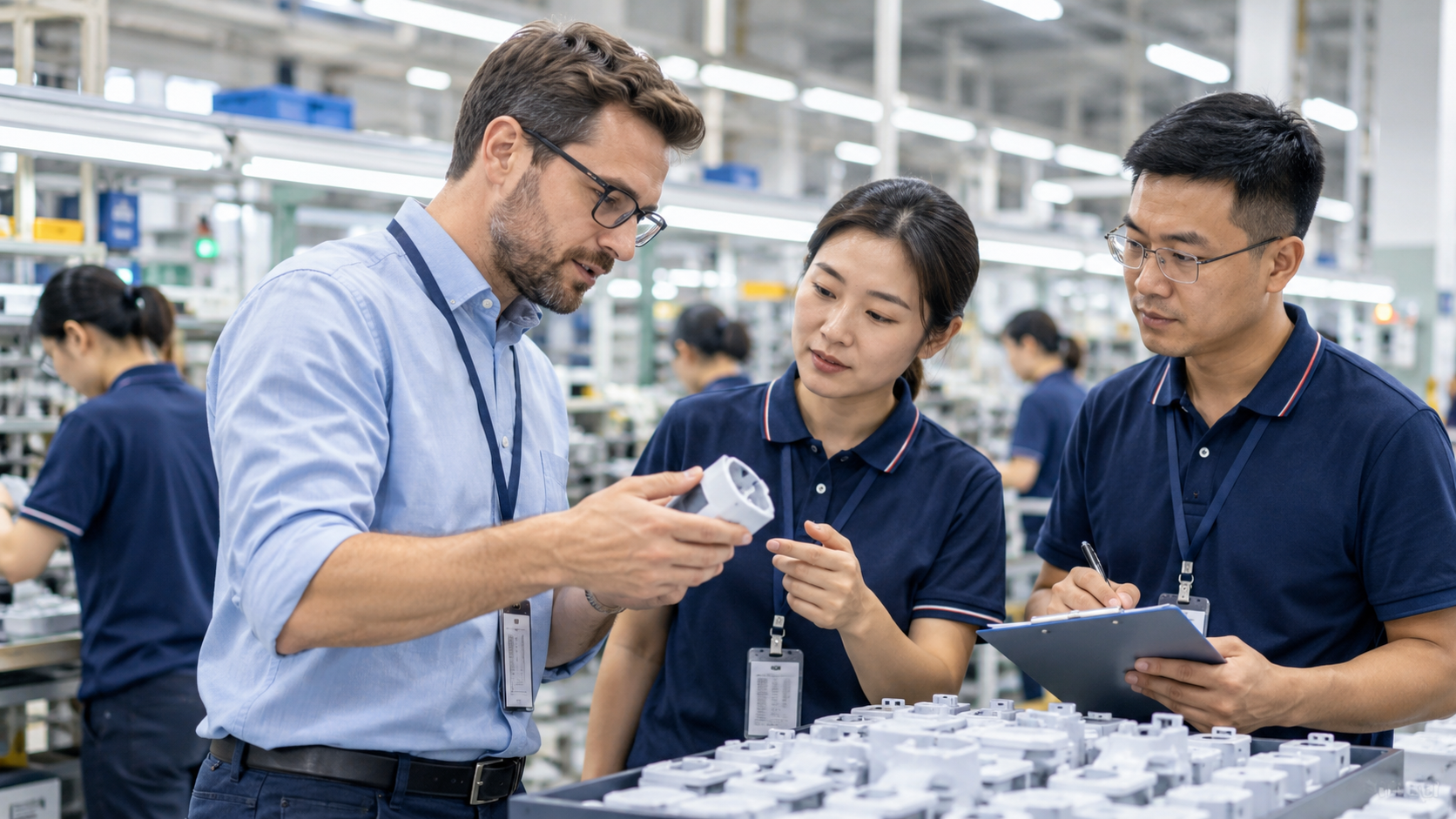
Clear specifications, approved samples and agreed quality criteria are essential. Regular production follow-up and inspections at the appropriate stages can also help identify problems before they become costly.
3. Communication is more important than it seems
Working with suppliers in China often involves more than translating emails or technical documents.
Misunderstandings can arise from differences in technical terminology, quality expectations, production practices and business communication.
A specification that seems clear to a European buyer may be interpreted differently by a manufacturer in China.
This is why effective supplier management requires regular communication, precise information and the ability to clarify technical details directly with the factory.
Anticipating misunderstandings is often much easier than resolving them after production has started.
4. Production follow-up helps keep projects on track
Once an order is confirmed, maintaining visibility over the production process is crucial.
Raw material availability, production scheduling, component sourcing and packaging preparation can all affect the final delivery date.
Without regular follow-up, potential delays or production issues may only become visible when it is too late to take corrective action.
Monitoring key milestones, maintaining contact with the factory and checking progress throughout production help buyers make better decisions and reduce unexpected surprises.
5. Supplier relationships should go beyond a single order
Building a reliable sourcing network takes time.
A supplier that performs well on one project may become a valuable long-term partner. However, this relationship needs to be maintained through regular communication, performance evaluation and continuous improvement.
Long-term cooperation also allows both parties to better understand each other’s expectations, technical requirements and working methods.
For European companies sourcing regularly from China, developing a stable supplier network can become a real competitive advantage.
The value of having a partner on the ground
Managing suppliers from thousands of kilometres away is not always straightforward.
Having a local partner who understands both the expectations of European buyers and the realities of manufacturing in China can make a significant difference.
At Eurasia Consultis, we support European companies throughout their sourcing projects in China, from supplier identification and evaluation to production follow-up, quality coordination and logistics.
Our role goes beyond finding a factory. It is about helping clients build reliable sourcing relationships and making their projects run more smoothly.
Because successful sourcing is not just about finding the right supplier. It is about making sure that the supplier remains the right partner throughout the project.
How do you manage supplier relationships when sourcing internationally? Is finding the right factory the hardest part, or is managing the relationship over time the real challenge?
Preparing a sourcing project in China, or want tighter control over your current suppliers? Tell us about your project.